Current Members

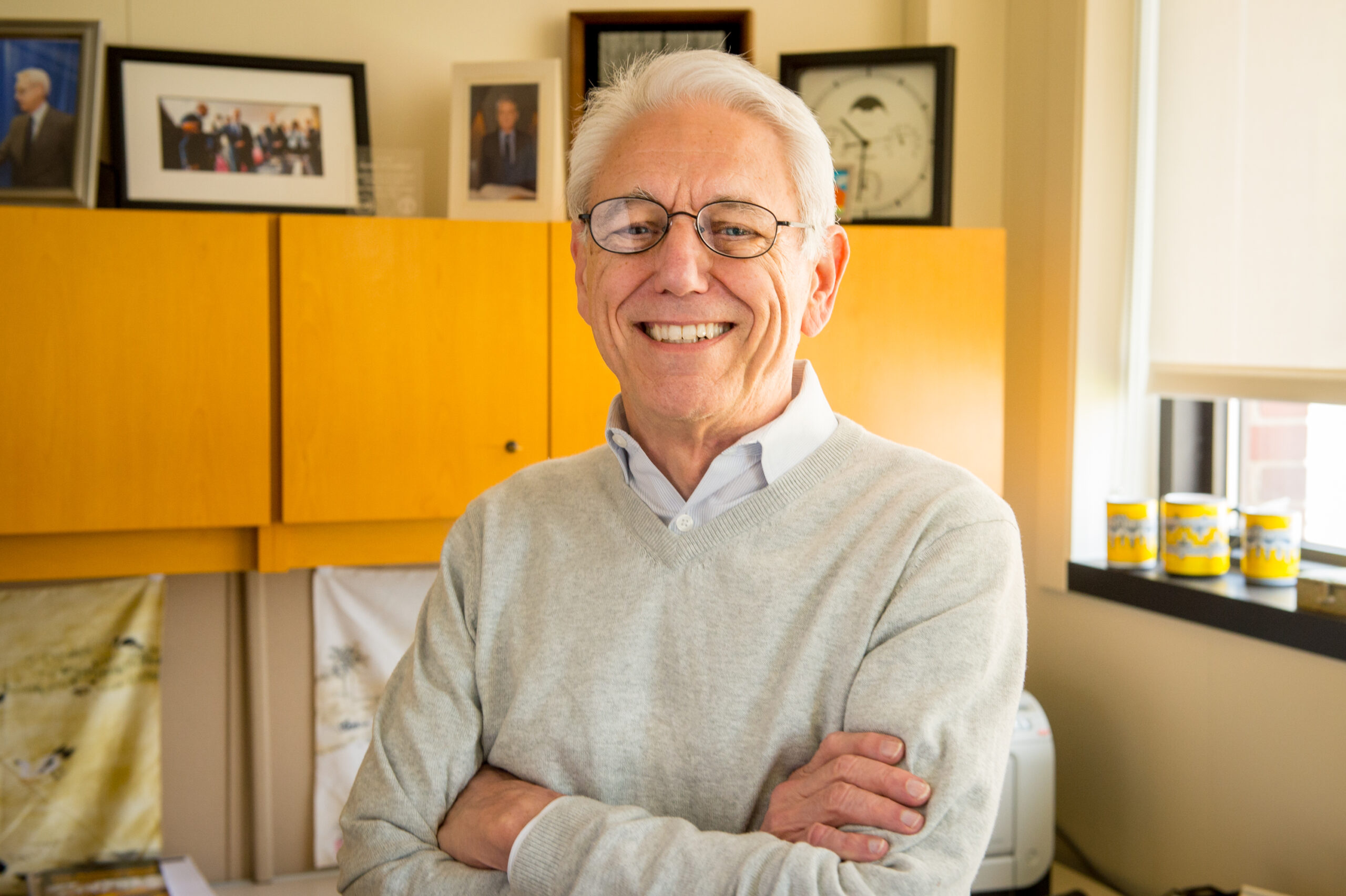
Dr. Jeroen van den Brink

Board Member, Director of the Leibniz Institute for Solid State and Materials Research Dresden

Jeroen van den Brink is a Dutch theoretical condensed matter physicist renowned for his contributions to the understanding of strongly correlated quantum materials. Van den Brink earned his PhD from the University of Groningen, the Netherlands. Since 2009, he has served as the Director of the Institute for Theoretical Solid State Physics at the Leibniz Institute for Solid State and Materials Research (IFW) in Dresden, Germany. In parallel, he holds a professorship in solid-state theory at TU Dresden.
His research focuses on theoretical condensed matter physics, particularly electronic structure theory, correlated electron systems, topological states of matter, and the theory of quantum matter. His work has earned him several accolades, including the Humboldt Research Prize and the Van der Waals Professorial Chair at the University of Amsterdam.


Research website: https://www.ifw-dresden.de/ifw-institutes/itf/home/prof-dr-jeroen-van-den-brink 

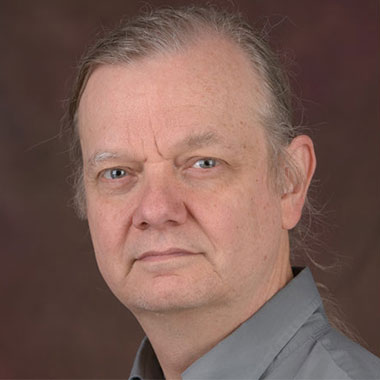
Dr. Joel Moore

Board Chair, Chern-Simons Professor of Mathematical Physics

Joel Moore received his Ph.D. from MIT in 2001 and joined UC Berkeley and Lawrence Berkeley National Laboratory in 2002 after a postdoc at Bell Labs Lucent Technologies.  He was promoted to tenure in 2007 and is currently the Chern-Simons Professor of Mathematical Physics.  His work is primarily on the theory of correlated and topological states of electrons in solids, with applications to their transport, optical, and quantum coherent properties. Areas of his scientific contributions include the theory of topological phases and their electromagnetic responses, the role of quantum entanglement in understanding quantum matter analytically and computationally, and the nature of coherent quantum dynamics in many-body systems.  He has been an NSF CAREER and Fulbright grantee and is an elected Member of the NAS, a Fellow of the APS, and a Simons Investigator.  He is former chair of the science advisory board for the Kavli Institute for Theoretical Physics and has chaired or co-chaired reports for the Department of Energy and National Science Foundation.


Research website: https://vcresearch.berkeley.edu/faculty/joel-moore

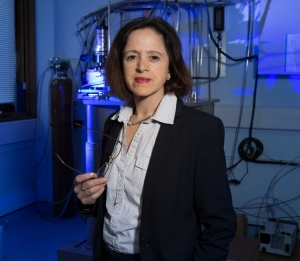
Dr. Kathryn A. “Kam” Moler

Board Member, PMARVIN CHODOROW PROFESSOR at Stanford University

MARVIN CHODOROW PROFESSOR AND PROFESSOR OF APPLIED PHYSICS, PHYSICS, AND ENERGY SCIENCE ENGINEERING

Kathryn A “Kam” Moler is a condensed matter physicist whose research focuses on developing new tools to measure magnetic properties of quantum materials and devices on the nanoscale. Her laboratory builds and operates highly sensitive scanning probe microscopes, including SQUID and Hall probe systems, to study superconductivity and mesoscopic quantum mechanical effects at low temperatures. Her major scientific contributions include probing the dynamics of individual magnetic vortices and testing theoretical models of high-temperature superconductivity.

She earned her B.S. and Ph.D. in Physics from Stanford University and worked at IBM and as an R.H. Dicke postdoctoral fellow at Princeton University before joining the Stanford faculty. Beyond her research, she has held significant leadership roles at Stanford, including serving as the Vice Provost and Dean of Research, the transition dean for the Stanford Doerr School of Sustainability, and Stanford’s Vice President for SLAC. She is a member of the National Academy of Sciences.


Research website: https://profiles.stanford.edu/kathryn-moler 

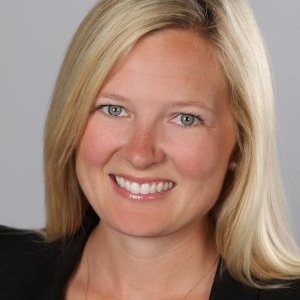
Dr. Krysta M. Svore

Board Member, General Manager, Microsoft Quantum Architectures and Computation (QuArC), Microsoft Research

Krysta Svore received her Ph.D. with Highest Distinction in Computer Science from Columbia University. Her research focuses on quantum algorithm. She leads a team working on designing scalable, fault-tolerant software architecture for translating a high-level quantum program into a low-level, device-specific quantum implementation. She serves as a representative for the Academic Alliance of the National Center for Women and Information Technology, and is a member of the American Physical Society and the Association for Computing Machinery. Her work has received recognitions such as a Kavli Fellowship of the National Academy of Sciences and an AAAS Fellowship. She was also named to the “39 Most Powerful Female Engineers 2018” list by Business Insider.

Dr. Leslie Schoop

Board Member, Professor of Chemistry at Princeton University

Dr. Schoop received her Diploma in Chemistry from Johannes Gutenberg University (2010) and PhD in Chemistry from Princeton University (2015). She then went on to work as a Minerva fast-track fellow under Professor Bettina Lotsch at the Max Planck Institute for Solid State Research (2015-2017). Dr. Schoop joined the Princeton University Department of Chemistry Faculty in 2017, was tenured in 2022 and promoted to full professor in 2024. Since 2024, she has directed the Princeton Center for Complex Materials, an NSF-funded MRSEC. In 2019, she won the Beckman Young Investigator Award and became a Moore Foundation EPiQS Materials Synthesis Investigator. In 2020, she was awarded the Packard fellowship for science and engineering, and in 2021, the Sloan fellowship in Chemistry and the DOD Office of Naval Research Young Investigator award. In 2022, she was awarded the NSF CAREER award, and in 2025, the Presidential Early Career Award for Scientists and Engineers (PECASE). The Schoop Lab is working at the interface of chemistry and physics, using chemical principles to find new materials with exotic physical properties.


Research website: https://chemistry.princeton.edu/faculty-research/faculty/leslie-schoop/

Dr. Louis Taillefer

Board Member, Director of the Quantum Frontiers Lab

Louis Taillefer is a Professor Emeritus at the Université de Sherbrooke, in Québec, Canada, where he leads a research group specialized in the experimental investigation of quantum materials – such as superconductors and metals with strongly correlated electrons – at very low temperature and in high magnetic fields.

He has received a number of awards, including the Killam Prize in natural sciences (2012), the Simon Memorial Prize in low-temperature physics (2017) and the Kamerlingh Onnes Prize in superconductivity (2018), for pioneering experimental work in superconductivity, in particular the discovery of multicomponent superconductivity, quantum oscillations and quantum critical points in heavy-fermion and copper-oxide superconductors. In 2021, he was elected Fellow of the Royal Society.

Taillefer has fostered collaborative research at the international level, as Director of the Quantum Materials Program of the Canadian Institute for Advanced Research (CIFAR) from 1998 to 2019 (and as co-director from 2019 to 2025), a highly interactive network bringing together researchers from Canada, Asia, Europe and the US, to explore and understand phenomena such as high-temperature superconductivity, topological protection, magnetic frustration and Planckian dissipation. Since 2022, he has been Director of the Quantum Frontiers Lab, an International Research Lab (IRL) created by the French CNRS to develop and support collaborations with researchers in France within the field of quantum materials and quantum information.


Research website: https://www.physique.usherbrooke.ca/taillefer/index_eng.html

Dr. Mohammad Amin

Board Member, Scientific Fellow at D-Wave Quantum Inc, Adjunct Professor of Physics at SFU

Dr. Mohammad Amin is a Scientific Fellow at D-Wave Quantum Inc. and an Adjunct Professor in the Department of Physics at Simon Fraser University. He received his BSc in electrical engineering from Shiraz University, his MSc in physics from Sharif University of Technology, and his PhD in condensed matter physics from University of British Columbia. Since joining D-Wave in 2000, Dr. Amin has played a central role in the development of large-scale quantum processors and in advancing both the theoretical and experimental understanding of their complex behavior. His research spans superconducting qubits, noise and decoherence in superconducting circuits, open quantum modeling, quantum critical phenomena, and quantum machine learning. His work has resulted in numerous patents and publications in leading journals, including Science, Nature, Nature Physics, Nature Communications, and Physical Review X.


Research website: https://www.sfu.ca/physics/people/adjuncts-associates/mohammad_amin.html

Dr. Philip Hofmann

Board Member, Professor of Physics at Aarhus University

Philip Hofmann is an experimental condensed matter physicist and Professor at Aarhus University, Denmark, where he serves as Scientific Director of the synchrotron radiation source ASTRID2. He received his Ph.D. from the Fritz Haber Institute in Germany in 1994, working on surface structural determination using X-ray photoelectron diffraction. His current research focuses on time- and angle-resolved photoemission spectroscopy (ARPES) of quantum materials, with an emphasis on high spatial resolution studies of functional devices under non-equilibrium conditions, bridging ARPES and transport approaches. He also pursues X-ray photoelectron spectroscopy and diffraction at free-electron lasers, extending these techniques into the ultrafast regime.


Research website: https://www.au.dk/en/philip@phys.au.dk 

Dr. Stephen Bartlett

Board Member, Professor of Physics, Centre for Engineered Quantum Systems, School of Physics, University of Sydney

Stephen Bartlett is a Professor of Physics at the Centre for Engineered Quantum Systems at the University of Sydney’s School of Physics.

He is a theoretical quantum physicist who leads a team pursuing both fundamental and applied research in quantum information theory, including the theory of quantum computing. He is a Chief Investigator in the Australian Research Council Centre of Excellence in Engineered Quantum Systems (EQUS), where he leads a research program on Designer Quantum Materials. He is also the inaugural Lead Editor of the APS journal PRX Quantum.


He completed his Ph.D. in mathematical physics at the University of Toronto in 2000. Moving to Australia, he directed his research to the theory of quantum computing, first as a Macquarie University Research Fellow and then as an ARC Postdoctoral Research Fellow at the University of Queensland. Since 2005, he has led a research program in theoretical quantum physics at the University of Sydney, with interests spanning quantum computing, quantum measurement and control, quantum many-body systems, and the foundations of quantum theory. He is also a Fellow of the American Physical Society and a Fellow of the Royal Society of New South Wales.

Past Members

Dr. Antoine Georges

CCQ Director, Flatiron Institute

Antoine Georges is a Professor at Collège de France, Paris (chair of Condensed Matter Physics) and the Director of the newly founded Center for Computational Quantum Physics at the Flatiron Institute, Simons Foundation in New York. He also has a joint appointment with the University of Geneva, Switzerland. He obtained his Ph.D. from École Normale Supérieure in 1988. While his early research concerned the statistical mechanics of disordered systems, his main focus has been on the physics of quantum materials in which electron-electron interactions are strong.

Dr. Georges is one of the co-inventors of dynamical mean-field theory, for which he shared the 2006 Europhysics Condensed Matter Prize. This theory has deeply transformed our understanding of these materials and our ability to explain, calculate and predict their physical properties. He also received the 2007 Silver Medal of the CNRS, the 2014 Hamburg Prize for Theoretical Physics as well as a major Synergy Grant from the European Research Council. He is a member of the French Academy of Sciences.

Research website: https://www.college-de-france.fr/site/en-antoine-georges/index.htm


Dr. Benjamin Eggleton

Professor of Physics, Director, Co-Director

Professor Benjamin Eggleton is the Pro-Vice-Chancellor (Research) at The University of Sydney. He also serves as co-Director of the NSW Smart Sensing Network (NSSN). Eggleton was the founding Director of the Institute of Photonics and Optical Science (IPOS) and Director of Sydney Nano at the University of Sydney. He was previously an ARC Laureate Fellow and an ARC Federation Fellow twice and was founding Director of the ARC Centre of Excellence for Ultrahigh bandwidth Devices for Optical Systems (CUDOS) from 2003-2017.


Eggleton is the author or co-author of more than 510 journal publications, including Nature Photonics, Nature Physics, Nature Communications, Physical Review Letters and Optica and over 200 invited presentations. Eggleton is a Fellow of the Australian Academy of Science (AAS), the Australian Academy of Technology and Engineering (ATSE), the Optical Society of America, SPIE and IEEE. He is Editor-in-Chief of APL Photonics.


Dr. George Crabtree

Professor of Physics, Distinguished Fellow of Argonne National Laboratory, and Director, Joint Center for Energy Storage Research

George Crabtree is Professor of Physics at the University of Illinois-Chicago, Distinguished Fellow of Argonne National Laboratory and Director of the Joint Center for Energy Storage Research (JCESR). His research interests include materials science, sustainable energy, nanoscale superconductors and magnets, vortex matter in superconductors, and highly correlated electrons in metals. He has led workshops for the Department of Energy (DOE) on next-generation energy storage, hydrogen, solar energy, superconductivity, and materials under extreme environments, and co-chaired the Undersecretary of Energy’s assessment of DOE’s Applied Energy Programs. He has testified before the U.S. Congress on the hydrogen economy, meeting sustainable energy challenges, and energy storage.

Dr. Crabtree has won numerous awards including the Kammerlingh Onnes Prize, U.S. DOE Award for Outstanding Scientific Accomplishment in Solid State Physics and an R&D 100 Award. He is a Fellow of the American Physical Society, a charter member of ISI’s

Dr. J.C. Séamus Davis

Professor, Senior Physicist

Séamus Davis is a Professor of Physics at Cornell University. He undertakes a wide range of experimental low-temperature research into the fundamental macroscopic quantum physics of superconductors, superfluids, supersolids, heavy-fermions, topological insulators and superconductors, magnetic spin and monopole quantum liquids, as well as developing new techniques for visualization and measurement of complex quantum matter.

Dr. Davis received the Outstanding Performance Award Berkeley National Lab. (2001); Science and Technology Award Brookhaven National Lab. (2013); Fritz London Memorial Prize (2005); H. Kamerlingh-Onnes Memorial Prize (2009); Honorary Doctorate – National University of Ireland (2014). Science Foundation Ireland – Medal of Science (2016), Fellow of the Institute of Physics (UK), the American Physical Society (USA); Member of the US National Academy of Sciences.

Research website:

Dr. Lesley Cohen

Chair of the Advisory Board, Professor of Solid State Physics


Lesley Cohen is a Professor of Solid State Physics at Imperial College London. Her research focuses on quantum interference for organic thermoelectric, energy-efficient solid-state caloric cooling, competing for exchange antiferromagnets for spintronics and long-range triplet superconductivity. She is currently the Consul for the Faculty of Natural Sciences and Education at Imperial College and recently stepped down as head of Experimental Condensed Matter. She received the Imperial College Julia Higgins Award for her contribution to the promotion and support of women in science and remains committed to equality and diversity within STEM.

Dr. Cohen has served on numerous Boards including Superconductivity, Science and Technology; Imperial College Consultants ICON; the Education Board for the Institute of Physics; Kings College London Science Advisory Board; and the External Advisory Board of IFW Dresden and the EPSRC Materials Strategic Advisory Technical Panel.


Research website: www.imperial.ac.uk/people/l.cohen
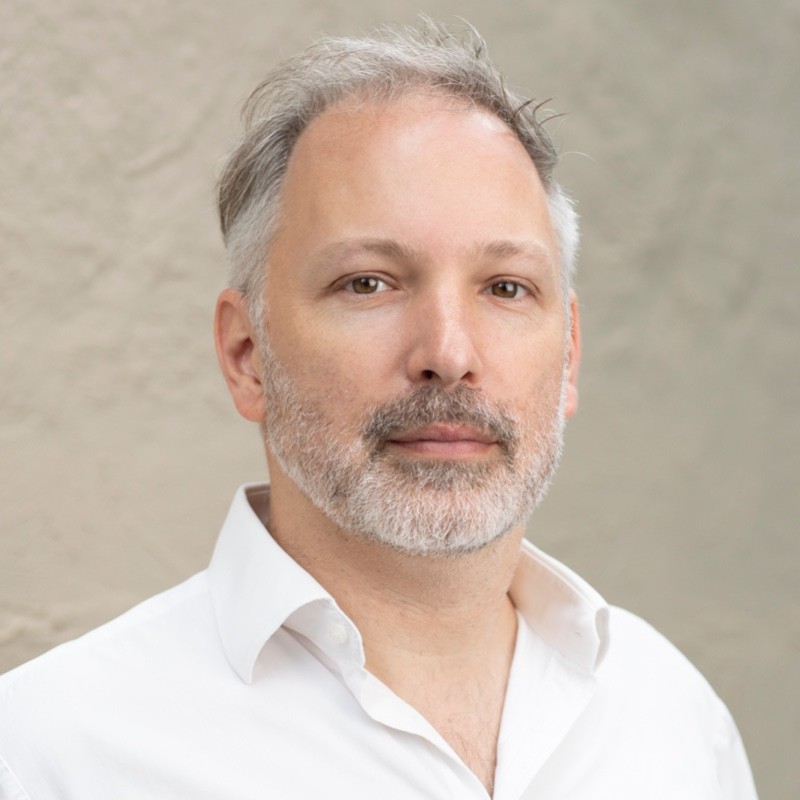
Dr. R. Stanley Williams

Adjunct Professor, UCLA Chemistry and Biochemistry

R. Stanley Williams is a Hewlett Packard Enterprise Senior Fellow and Senior Vice President. His primary scientific research has been in the areas of solid-state chemistry and physics, and their application to technology. More recently, he has been focused on the dynamical properties of electrons, ions and photons in nanostructures and their applications for computation and cognition. In 2008, a team of researchers he led announced that they had built and demonstrated the first intentional memristor, the fourth fundamental electronic circuit element predicted by Prof. Leon Chua in 1971.

Dr. Williams has received widespread recognition for business, scientific and academic achievement, including being named one of the top 10 visionaries in the field of electronics by EETimes, the 2014 IEEE Outstanding Engineering Manager Award, the 2009 EETimes Innovator of the Year ACE Award, the 2007 Glenn T. Seaborg Medal for contributions to Chemistry, the 50th Anniversary Laureate Lecturer on Electrical and Optical Materials for the TMS, the 2004 Herman Bloch Medal for Industrial Research, the inaugural Scientific American 50 Top Technology leaders in 2002, and the 2000 Julius Springer Award for Applied Physics. He was a co-organizer and co-editor of the workshop and book “Vision for Nanotechnology in the 21st Century”, respectively, that led to the establishment of the U. S. National Nanotechnology Initiative in 2000.


Dr. Stuart Parkin

Director, Max Planck Institute of Microstructure Physics

Stuart Parkin is a Professor at the Institute of Physics of the Martin-Luther-University at Halle-Wittenberg where he develops and shapes the field of material sciences, and applied spintronics specifically. Considered a pioneer in the science and application of spintronic materials, he has made crucial discoveries in the behaviour of thin-film magnetic structures leading to the increased data density and capacity of hard drives.

Dr. Parkin has received numerous honours including the Gutenberg Research Award, the Humboldt Research Award, the American Institute of Physics Prize for Industrial Applications of Physics, the European Physical Society’s Europhysics Prize, and the American Physical Society’s International New Materials Prize. Named the first “Innovator of the Year” by R&D Magazine in 2001, he received the “No Boundaries” Award for Innovation from The Economist in 2007. A corresponding Fellow of the Royal Society of Edinburgh, Scotland, Dr. Parkin received the Millennium Technology Prize for his work on spintronic materials.

Research website: